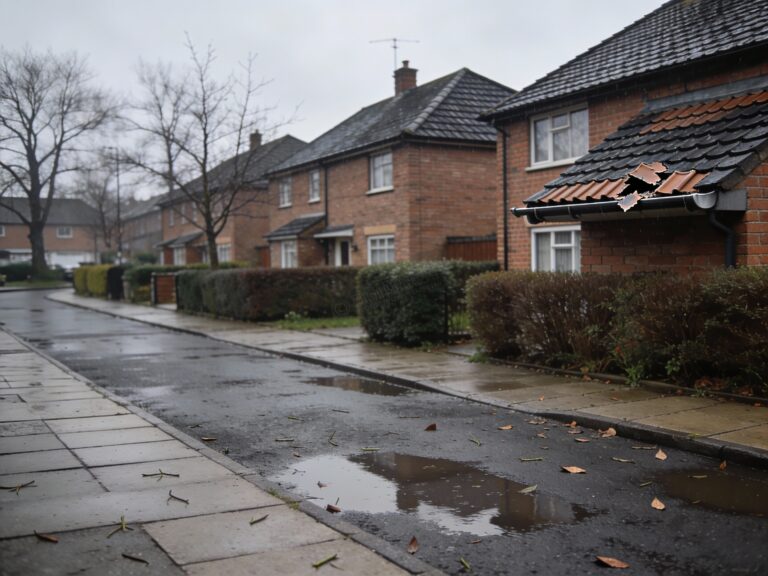

Storm Goretti was another reminder of how exposed British homes are to extreme weather. High winds, driving rain, snow in some areas and prolonged disruption tested buildings across the UK. While attention often focuses on fallen trees and travel problems, roofs quietly take the brunt of these events.
For many homeowners, Goretti only became relevant when tiles came loose, gutters failed, or water appeared where it should not. These problems are rarely about freak conditions alone. In most cases, storms expose existing weaknesses.
This article looks at what storms like Goretti reveal about typical British roofs, the types of damage that occur most often and the practical steps that make roofs more resilient ahead of future severe weather.
Why storms expose roof problems so quickly
Most roofs do not fail suddenly without warning. Damage during storms usually results from a combination of age, weathering, and minor defects that have gone unnoticed.
High winds create uplift pressure. Rain is driven sideways rather than downwards. Snow adds sustained weight. These forces work together and exploit weak points.
Common underlying issues include:
- Loose or poorly fixed tiles or slates
- Mortar deterioration along ridges and verges
- Blocked or damaged gutters causing water to back up
- Aged felt or membrane that no longer sheds water effectively
- Previous repairs that were temporary or incorrectly done
In calm weather, these faults may not cause obvious problems. During a storm, they are tested all at once.
Types of roof damage commonly seen after major storms
After events like Storm Goretti, roofers across the UK tend to see similar patterns of damage. Understanding these helps homeowners know what to look for.
Dislodged or missing tiles
Wind uplift can loosen tiles, especially on older roofs or those exposed to prevailing winds. Once one tile moves, nearby tiles are more likely to follow.
Missing tiles do not always cause immediate leaks. Water can enter gradually, soaking insulation and timbers before stains appear internally.
Ridge and verge failure
Ridge tiles are particularly vulnerable when mortar has cracked or eroded. Storm winds can lift ridges clean off if they are not mechanically fixed.
Verge tiles at the edges of roofs also suffer during high winds, especially where older sand-and-cement bedding has deteriorated.
Gutter and drainage problems
Storms bring debris. Leaves, moss, and broken branches can block gutters and downpipes quickly.
When water cannot drain away, it spills back towards the roof edge and can enter behind fascias or under tiles. This often shows up days later as damp patches.
Damage from falling objects
Branches, fences, and even neighbouring roof materials can strike roofs during storms. The damage may be localised but still serious.
Cracked tiles and punctured membranes are easy to miss from ground level.
Why British roofs are particularly vulnerable
The UK has a wide mix of roof types, many of them old. While traditional materials are durable, they require ongoing maintenance.
Factors that increase vulnerability include:
- High proportion of housing built before modern fixing standards
- Use of mortar-based systems rather than mechanical fixings
- Exposure to repeated freeze–thaw cycles
- Increasing frequency of severe weather events
Many roofs were designed for a climate that was less extreme than the one now being experienced. This does not mean they need replacing, but it does mean maintenance matters more.
What homeowners should check after a storm
After severe weather, it is sensible to carry out basic checks as soon as conditions are safe. This does not mean climbing onto the roof.
From ground level, look for:
- Gaps or uneven lines in the roof covering
- Tiles or slates on the ground
- Debris in gutters or overflowing downpipes
- Visible ridge tiles that appear lifted or misaligned
Inside the property, check loft spaces if accessible. Signs of concern include damp insulation, water staining, or daylight visible through the roof covering.
Problems found early are easier and cheaper to fix.
How roofs can be made more resilient to future storms
Storm-proofing a roof is usually about reducing weak points rather than changing the entire structure.
Regular inspections
Periodic roof inspections catch small issues before they worsen. Many problems develop slowly and are visible long before failure occurs.
For older properties, inspections every few years are sensible, with additional checks after major storms.
Upgrading fixings where appropriate
Modern roofing standards rely more on mechanical fixings than mortar alone. Where ridge tiles or verge details are being repaired, upgrading to dry-fix systems can improve wind resistance.
These systems allow controlled movement and reduce reliance on aging mortar.
Maintaining gutters and roof edges
Clear drainage is essential during storms. Regular gutter cleaning reduces the risk of water backing up into the roof structure.
Fascias and soffits should also be checked for rot or gaps that allow wind-driven rain to enter.
Addressing trees and nearby structures
Overhanging branches are a common cause of storm damage. Trimming trees reduces the risk of impact and debris build-up.
Sheds, fences, and loose garden structures can also become airborne hazards in high winds.
Common mistakes homeowners make after storm damage
Experience shows that well-meaning actions sometimes make problems worse.
- Delaying repairs because leaks seem minor
- Using temporary sealants instead of proper fixes
- Ignoring hidden damage in loft spaces
- Assuming missing tiles are only a cosmetic issue
Storm-related roof damage often progresses silently. By the time internal signs appear, structural timbers may already be affected.
Insurance, responsibility, and realistic expectations
Storm damage is often covered by buildings insurance, but policies vary. Insurers usually expect roofs to be reasonably maintained.
Damage caused by wear and tear rather than the storm itself may not be covered. This is why documentation and prompt assessment matter.
For leasehold or shared properties, responsibility may sit with a freeholder or management company. Clarifying this early avoids delays.
What storms like Goretti suggest about the future
While no single storm defines a trend, recent years have shown more frequent severe weather events affecting the UK.
For homeowners, this shifts the role of roof maintenance from occasional upkeep to a core part of protecting the building.
Resilience does not mean overbuilding. It means understanding how roofs fail and addressing known weaknesses before they are tested again.
A roof that performs well during storms is rarely noticed. That quiet reliability is often the result of small, sensible decisions made in advance.